A Health Center That Will See You. A Phone That Stays On.
What National Health Center Week reminds us about reaching the people health care too often misses.
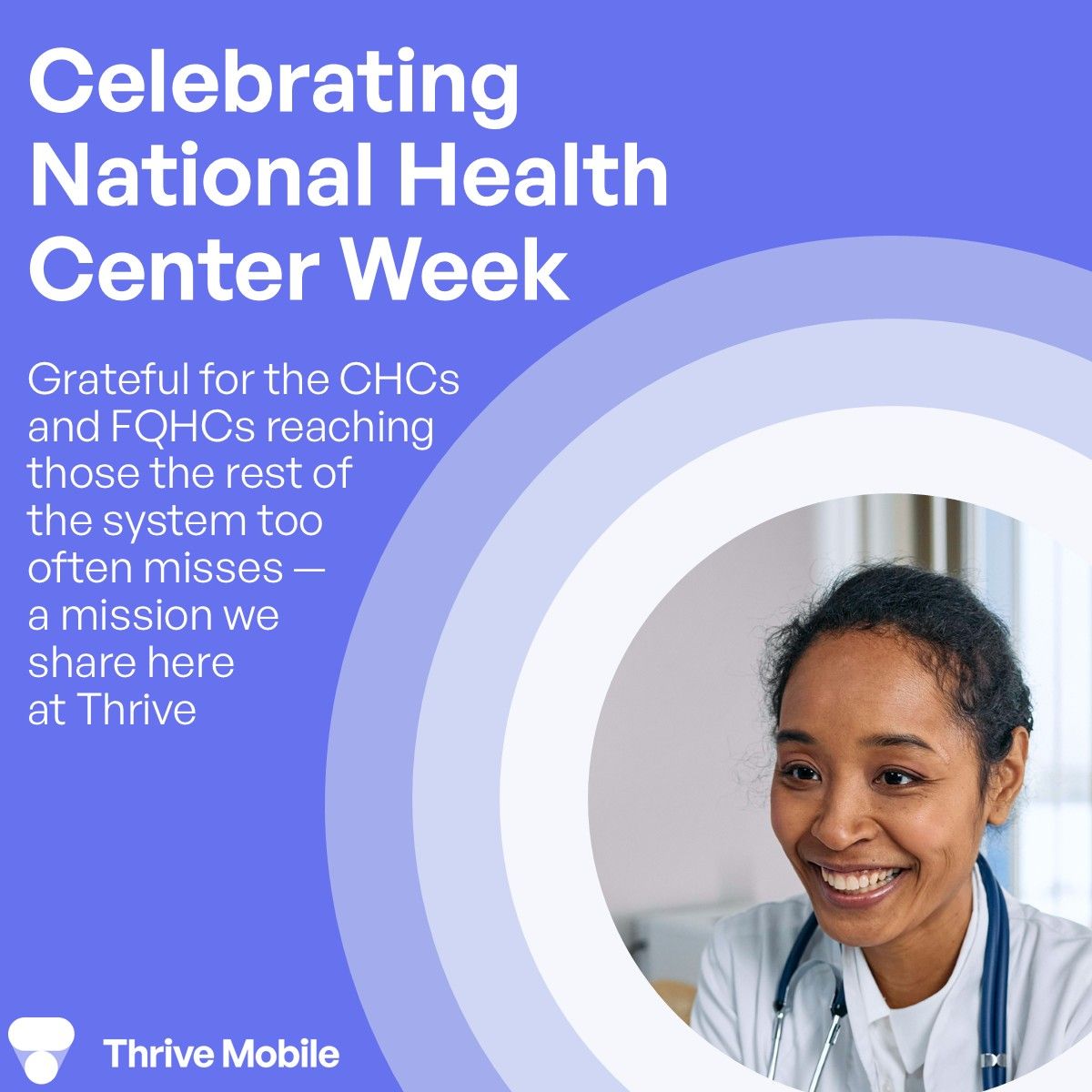
Every year, National Health Center Week honors the network of Community Health Centers (CHCs) and Federally Qualified Health Centers (FQHCs) built specifically to reach the communities the rest of our health system too often overlooks. In places where population density can't support a private practice, and for patients who are Medicaid-insured, uninsured, or otherwise unlikely to be seen, CHCs and FQHCs show up.
Today, more than 1,500 CHCs serve over 52 million patients across the country. Nearly half rely on Medicaid, and many carry no insurance at all — patients the rest of the health system still isn't built to reach. Their mission comes down to this: meet patients where they are, and ensure no community goes without high-quality primary care.
That mission doesn't just show up in good intentions, it shows up in outcomes. Data shows FQHCs reduce costly emergency department visits by giving people a real primary care option close to home, and that the added support they provide — helping people get to appointments, understand their care, and stay engaged — measurably increases how often people actually come back. Research even shows FQHCs outperforming both safety-net and mainstream practices alike on measures such as behavioral health access, culturally responsive care, and social needs screenings and referrals. FQHCs don’t just reach patients, they provide high-quality, compassionate care.
Large health systems and hospitals tend to get the headlines — the rankings, the innovation stories, the ribbon cuttings. But this week, and every week, it's important we recognize the quieter backbone doing just as much to hold the system together.
At Thrive, this same mission drives our own work. For millions of Medicaid and Medicare members, staying connected to care is the hardest part of staying healthy. And often the patients that community health centers serve are the same ones who lose that connection between visits. In Louisiana, we're excited to work alongside the Louisiana Primary Care Association (LPCA) and its member health centers to make sure all Louisianans have the connectivity to stay reachable and supported between visits.
Sometimes the biggest health challenges come down to something seemingly simple but often hard to execute: a health center that will see you, a phone that stays on. Meeting people where they are is the work, and this week we are grateful for the health centers across the country that put in that work every day.
Sources:
- U.S. Health Resources and Services Administration. (2024). 2024 patient characteristics snapshot [Data set]. HRSA Uniform Data System. https://data.hrsa.gov/tools/data-reporting/data-snapshot
- About National Health Center Week. https://healthcenterweek.org/about-nhcw/#91d14447-72af-4879-ad1f-94f23d4f5bfe-link
- Fung, V., Archer, D., Haas, J.S., Shirley, T., Sonik, R.A., & Clark, C. (2026). Opportunities and Challenges for the Federally Qualified Health Center Program: A Critical Review. Annual Review of Public Health, 47, 515–532.
- Schifferdecker, K.E., Yang, C.W., Mackwood, M.B., et al. (2024). Safety Net Primary Care Capabilities After the COVID-19 Pandemic. JAMA Health Forum, 5(8), e242547

